


Message from Bruno Suppa, CEO
At BDO Canada, doing more together reflects our belief that we are stronger when everyone has the opportunity to participate, contribute, and succeed. Creating an inclusive, accessible, and barrier-free environment is central to this commitment and to our firm’s values. Since publishing our Accessibility Plan in 2023, we have continued to identify and remove barriers and advance accessibility in meaningful ways.
In 2026, we built on the accessibility work already underway across the firm. We strengthened external collaboration to enhance inclusive recruitment, accessibility testing, and the design of more accessible experiences. We also expanded our support for disability inclusion in the community, guided by leadership from our Persons with Disabilities Pillar.
Within the firm, we improved the process employees use to request assistive technology and workplace accommodations, ensuring each request reaches the team best positioned to respond. We also added a follow-up step to confirm that the support provided meets each employee’s needs. Across our digital environment, we refreshed our brand and website with stronger colour contrast, larger text, and clearer visual hierarchy, and enabled more settings that employees can adjust independently.
We also invested in learning, culture, and the built environment. This included integrating mental health training into the learning journey for our leaders and making physical accessibility improvements in our offices. As a result, employees have told us they are seeing a positive shift in our culture toward greater disability inclusion.
I am proud of our progress and of the many people across our firm who continue to turn our commitments into meaningful change.
We know that accessibility is an ongoing journey. We remain committed to listening, learning, and making continuous improvements to create a more accessible experience for our people and clients.

Bruno Suppa
CEO, BDO Canada LLP
Contact information
BDO Canada values and appreciates feedback regarding our Accessibility Plan, our Accessibility Progress Reports, and our accessibility practices in general. If you require an alternative format of this plan or would like to provide feedback, we invite you to contact us through the following channels:
Email: [email protected]
Phone: 416-865-0111 (National Head Office)
Mail:
BDO Canada LLP
Accessibility Consulting Team
180 Kent Street, Suite 1700
Ottawa, Ontario
K1P 0B6
We offer alternative formats upon request, including:
- Large print
- Braille
- Other electronic formats that are compatible with adaptive technologies
Governance and culture
Our commitments
1. We will continue to build accessibility into our positions, structures, and metrics.
Status: ongoing
Progress: We strengthened the teams supporting accessibility and continued regular coordination between our Diversity, Equity, Inclusion and Accessibility (DEIA) team and our Accessibility Consulting team. Accessibility is also being considered earlier in firm-wide event planning and discussions about new offices and office redesigns.
We continue to monitor disability representation through voluntary self-identification. Following executive leadership changes, we are reviewing pillar sponsorship and opportunities to strengthen visible accountability for accessibility.
2. We will establish more opportunities for input and feedback from partners and staff with disabilities.
Status: on track
Progress: Feedback received through our accessibility inbox, DEIA team, and AssistMe process continues to be reviewed and directed for follow-up. Employees who submit accessibility requests also receive a survey about their experience.
We added opportunities for employees to share their accessibility needs and experiences through event registration, a return-to-work survey, and employee-led mentoring and story-sharing sessions. We will continue to explore more structured ways to gather feedback earlier in the development of internal materials and processes.
3. We will build accessibility awareness and expertise across the firm.
Status: on track
Progress: Mandatory accessibility training continued for all employees. We also strengthened external collaboration to support inclusive recruitment, training, accessibility testing, and design.
We expanded disability inclusion awareness through community sponsorships, National Accessibility Awareness Week programming, and our fifth annual Disability Employment Awareness Month event. Mental health training is now part of the learning journey for people leaders, supported by new return-to-work resources.
Through consultation, employees told us they are looking for more role-specific learning, particularly for teams involved in recruitment, technology, facilities, accommodations, and people leadership. Feedback also highlighted an interest in deeper learning on non-apparent disabilities and neurodiversity.
4. We will work to enhance the accessibility of our firm’s policies.
Status: on track
Progress: We are updating the accessibility section of our HR manual to reflect current practices and clarify accommodation processes, including requests related to assistive technology and the built environment. We continue to follow up with employees to confirm that the support provided meets their needs.
We are reviewing our travel policy to document current accessibility practices. As policies are reviewed, accessibility subject matter experts are engaged, as appropriate. This helps to ensure we identify and address accessibility considerations, including employee feedback and evolving federal accessibility standards.
Improving access to current and reliable policy and process information remains a priority. We are exploring opportunities to better organize and maintain accessibility-related information so employees can find the guidance they need more easily. We are also exploring a more consistent approach to scent-free workplaces and developing educational material on environmental sensitivities.
Employment
Our commitments
1. We will improve our data collection processes, metrics, and key performance indicators related to disability.
Status: on track
Progress: We created a dashboard that gives our HR team more timely insight into disability-related trends and demand for support. We also continue to review data with our disability management vendor and share relevant findings with HR and people leaders.
Campaigns encouraging employees to update their voluntary self-identification information continued, and disability representation increased. We are also reviewing accommodation requests received during recruitment to better understand where candidates may encounter barriers and identify opportunities to improve the process.
We identified a need to better capture accessibility feedback shared through conversations and emails. We are exploring an approach that protects confidentiality and personal information while allowing these experiences to inform improvements.
2. We will continue to enhance the effectiveness of our accommodations processes.
Status: on track
Progress: We streamlined the accessibility request process. Requests now follow an automated workflow and are routed to the appropriate team, facilitated by our HR Administrative Team, with accessibility-related requests prioritized. Employees are also provided with clearer timelines when a request requires additional review.
We clarified roles and steps for assistive technology and built environment requests, including a follow-up step to confirm that the support provided meets the employee’s needs.
We continued to strengthen disability management and return-to-work support. We also provided HR with additional guidance on supporting employees through the accommodation process.
Employees identified opportunities to improve the timeliness of support and strengthen understanding of the accommodation process. We are also finalizing a return-to-work survey to better understand employees’ experiences and identify opportunities for improvement. We will use this feedback to support clearer communication, role-specific learning, and earlier coordination so employees can receive the support they need in a timely manner.
3. We will continue to make our hiring, recruitment, and onboarding processes more inclusive of persons with disabilities.
Status: ongoing
Progress: Talent Acquisition completed accessible recruitment training and is applying the learning to job postings and candidate communications. This includes providing clear instructions, setting expectations, and using plain language to help remove barriers before a candidate needs to request an accommodation.
We are also expanding outreach to candidates with disabilities through external collaboration and disability-focused job boards, while exploring additional recruitment approaches.
We introduced a Dates of Recognition calendar to support more inclusive interview and event scheduling and are adding disability-related dates.
We are updating onboarding communications, so new employees learn about accessibility supports when they join. Benefits and wellness information has also been consolidated and simplified to make it easier to find.
Remaining priorities include developing role-specific guidance for Talent Acquisition and reviewing candidate assessments and assignments for accessibility barriers. We will also coordinate earlier among Talent Acquisition, HR, IT, and Facilities so supports can be ready by an employee’s first day.
4. We will ensure that all internal training is accessible.
Status: on track
Progress: Our digital learning includes closed captions, screen reader-accessible text, and audio narration. We are also improving content structure and tagging to support more reliable use with assistive technology.
We updated online learning standards to better support neurodivergent learners and provide greater flexibility where possible. Our focus will continue to be on removing barriers before learners need to request support.
Priorities include testing learning with assistive technology, applying consistent accessibility standards to training created across the firm, and strengthening accessibility in live and virtual learning. We are developing guidance and training to support these improvements.
Employees also identified a need for text-based alternatives to video learning and greater support for people with learning disabilities.
The built environment
Our commitments
1. We will update and refresh our emergency response information and procedures for people with disabilities.
Status: on track
Progress: We developed an individualized emergency response plan template and guide and began testing the approach in one office. The process includes identifying people who may require assistance and establishing appropriate supports, such as a buddy system.
We also installed an evacuation chair in a high-rise location and are assessing where similar equipment may be needed. Evacuation equipment will now be considered as part of individualized emergency planning.
Hybrid work has also changed emergency planning. We are exploring how office booking tools could help identify who is present, who may require assistance evacuating the office during an emergency, and who holds relevant safety certifications. Any personal information used for this purpose would be accessible only to individuals who need it to support emergency response.
Because building requirements and responsibilities vary by location, our goal is to establish a consistent firm-wide standard while allowing each office to implement plans that reflect its building and local requirements.
Next steps include communicating the planning tools, confirming their use, and incorporating emergency response planning into office health and safety inspections.
2. We will create a plan to regularly assess the accessibility of our office spaces.
Status: on track
Progress: We provided Local Office Managers with an accessibility checklist aligned with federal standards, creating a more consistent basis for assessing and comparing office spaces.
Accessibility standards for new and renovated offices now address automatic door operators, accessible fixtures and washrooms, and continuous accessible routes. Several offices added automatic door operators this year, which employees identified as a visible improvement.
We addressed significant barriers at two locations by relocating one office to the ground floor and installing an elevator in another new two-story location. We also confirmed that our buildings have an accessible entrance route.
Funding remains a key consideration in addressing broader accessibility barriers across all office locations. We are considering a prioritized approach that focuses investment on locations with the most significant barriers and considers how long we expect to occupy each space. We are also exploring whether accessibility should be included as a standard project budget item.
Accessibility improvements in leased premises may require coordination with landlords and, in some cases, more significant modifications. We continue to work with landlords to advance feasible enhancements and assess longer-term solutions. Employee feedback continues to reinforce the importance of considering accessibility from the outset.
3. We will develop mechanisms to communicate with our people and clients about the accessibility of our physical spaces.
Status: on track
Progress: Wheelchair-accessible meeting rooms are now identified in both our room and workspace booking systems, allowing employees to find and reserve an accessible space independently.
This improvement responded directly to employee feedback and made existing accessibility information easier to use.
The designation currently applies to meeting rooms rather than entire offices and does not yet provide clients with advance information about office accessibility. In the interim, clients can contact their BDO representative or [email protected] before a visit to ask about a location’s accessibility or discuss accommodation needs.
Information gathered through the office accessibility checklists will support the development of a resource that employees and clients can consult directly. Our next step is to complete the checklists and determine how this information will be maintained and shared.
Information and communication technologies (ICT)
Our commitments
1. We will look for ways to incorporate feedback from our people and clients with disabilities into the web accessibility process.
Status: on track
Progress: We relaunched our external website with larger text, stronger colour contrast, and clearer visual hierarchy. Automated accessibility monitoring continues across the site, and clients and members of the public can provide feedback through our accessible feedback form.
Changes to our internal platform also go through development and testing before release.
Automated checks cannot fully assess how accessible or usable content is in practice. Over the next two years, we will work with external expertise to establish manual testing using assistive technology.
2. We will improve communications about accessibility-related tools available to our people.
Status: on track
Progress: We removed unnecessary permission requirements for accessibility-related display settings, including office themes and blue light filtering, so employees can adjust them independently.
We are updating guidance on accessibility features for both Windows and Mac users so employees can identify available options without submitting a request.
We also intend to publish a central list of pre-approved accessibility tools to shorten provisioning times and make available supports easier to find.
Information about accessibility tools will also be incorporated into onboarding and learning rather than relying only on email communication.
3. We will further embed accessibility in our IT strategies and processes.
Status: on track
Progress: Accessibility requests now route directly to IT, reducing duplication and supporting faster responses. We also continue to replace internal PDFs with more accessible web content where possible.
We are expanding accessibility assessments to third-party tools and internal platforms. Future vendor evaluations will include accessibility conformance questions.
As the use of new tools expand across the firm, we are developing accessibility requirements and practical guidance as part of our broader AI governance.
We continue to strengthen awareness of accessible technology and the assistive tools available to employees. Earlier coordination between HR and IT will also help ensure that required equipment and technology are ready before a new employee’s first day.
Communication other than information and communication technologies
Our commitments
1. We will expand our consideration of accessibility within communication guidelines.
Status: on track
Progress: New standards for internal content emphasize plain language, clear structure, meaningful links and alternative text, accessible multimedia, and alternate formats upon request.
The standards also assign ownership for keeping content current and incorporate French-language requirements into publishing timelines.
Firm-wide communications now use multiple channels, with greater attention to content structure, timing, and density for employees with non apparent disabilities.
Local and independently distributed communications are not yet covered consistently. We plan to develop practical guidance and training for employees who create these communications
2. We will continue to enhance the accessibility of our templates.
Status: on track
Progress: Our refreshed brand improved our content to make it easier to read and navigate. Accessible colour combinations are available through our Brand Resource Centre.
We also standardized calendar invitations, removed inaccessible banner images from firm-wide email templates, and reinforced captioning and alternative text in social media guidance.
Areas for continued improvement include email banners, template text size, design assets created outside the central design team, and accessibility consistency in locally adapted templates. We are addressing these areas through updated guidance, accessible design resources, and ongoing education, with remediation prioritized as part of our ongoing accessibility work.
Employees also continue to encounter presentations with dense text or small type. We will continue to provide education and accessible design supports to improve how templates are used.
3. We will improve processes for providing documents, events, and social media posts that are accessible.
Status: on track
Progress: We are increasingly using web pages instead of attachments and PDFs. When accessible PDFs are required, we use an established remediation process, including for accessible documents requested by clients.
Firm-wide publications continue to be reviewed for accessibility. Event registration allows attendees to identify accessibility needs, and accessibility was incorporated earlier in planning our firm-wide learning event. The Accessibility Consulting Team also provided training to the Events and Sponsorships team on hosting accessible virtual events.
Priorities include raising awareness of our accessible media resources and testing interactive communication platforms with assistive technology. We will build on our training to establish a consistent approach to accessible virtual events.
The design and delivery of programs and services
Our commitments
1. We will seek feedback from our clients on the accessibility of our programs and services.
Status: Completed – June 2024
Progress: We continue to monitor our accessible feedback channels and act on trends identified through client and public feedback.
Requests for accessible documents remained the most common client need. These requests informed the development of targeted learning on ICT accessibility and accessible documents for clients and employees.
2. We will ensure that our clients with disabilities are aware of available accommodations.
Status: on track
Progress: Our cross-functional team continues to improve how accessibility supports are delivered and communicated. Accessibility is increasingly considered across the client experience, including offices, events, and published materials.
We also use community engagement and awareness initiatives to reinforce our commitment to disability inclusion.
Clients do not yet have a central resource describing the accessibility of individual offices. This gap is being addressed through our built environment work.
The procurement of goods, services, and facilities
Our commitments
1. We will continue to develop our knowledge and expertise into best practices in accessible procurement.
Status: on track
Progress: Accessibility features remain a required consideration in real estate decisions and in standards for new and renovated offices. We are exploring how to give accessibility greater weight in these assessments.
Accessibility is also being incorporated into the selection of a future firm-wide travel platform, including direct evaluation of shortlisted vendors.
Hotel accessibility will be considered in upcoming supplier evaluations, and the new booking process is expected to make it easier for travelers to identify their accessibility requirements directly.
As this work continues, we are coordinating responsibilities and investment priorities to support thoughtful and sustainable implementation. We recognize the importance of timely progress for employees who require accessible travel arrangements.
More broadly, we are working toward a more consistent approach to assessing accessibility across vendors and third-party tools. Over the next two years, our priority is to incorporate accessibility conformance questions into procurement processes, particularly for digital technologies, and to consider appropriate accessibility expectations in vendor agreements.
2. We will consider how we can better incorporate supplier diversity into our process for choosing vendors.
Status: in progress
Progress: We began engaging our top suppliers to better understand their Environmental, Social, and Governance (ESG) priorities. In 2026, we also introduced a sustainability questionnaire to assess ESG practices when onboarding new suppliers. This work will help inform the development of supplier diversity criteria and support our broader sustainability objectives.
Upcoming travel and technology procurements may also provide opportunities to apply supplier diversity criteria alongside accessibility requirements.
Consultations
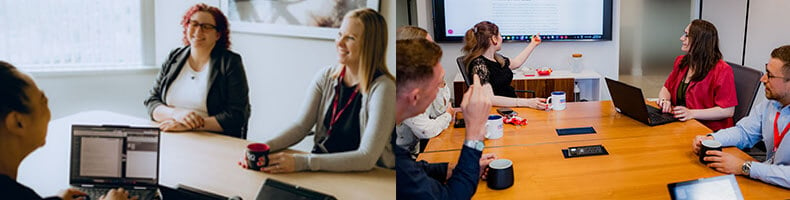
More than 90 employees contributed accessibility feedback to this progress report, and available client feedback was also considered.
An employee survey was open from June 1 to June 24, 2026, and received 69 responses. More than 25 employees also participated in 22 interviews and subject matter discussions, including members of the Persons with Disabilities Pillar.
Consultations covered all priority areas of the Accessible Canada Act, including culture, employment, the built environment, technology, communications, learning, benefits, travel, and procurement.
We also reviewed feedback received through our accessibility inbox, request process, and website feedback form.
The BDO Accessibility Consulting Team, whose members are persons with disabilities, led the consultations and development of this report.
Feedback
In 2026, 48 of 69 survey respondents (70%) rated BDO Canada’s accessibility progress as good or very good, 13 (19%) rated it fair, and 8 (12%) rated it poor. Percentages are rounded. The results suggest positive progress while also showing that experiences vary. Key themes included:
- Culture and awareness: Employees described greater openness about disability and valued firm-wide training, mentoring, and awareness events. They also requested ongoing, role-specific learning, particularly on non-visible disabilities and neurodiversity.
- Physical accessibility: Employees noticed improvements such as automatic doors, adjustable workstations, lighting changes, and wellness spaces, while also noting that progress varies by office. Priorities include addressing the most significant barriers, using interim measures where appropriate, and continuing to improve accessibility across office locations.
- Accommodation experience: Employees reported different experiences with the accommodation process. Feedback identified opportunities to improve the timelines of support and make the process easier to understand. Clearer communication, earlier coordination, and greater confidence among those supporting the process remain priorities.
- Hybrid and sensory barriers: Noise, lighting, open-concept spaces, and workplace routines can create barriers, particularly for neurodivergent employees. Employees requested quiet spaces, adjustable environments, and clearer shared-space practices.
- Accessible-by-design approaches: Employees want accessibility built into learning, presentations, events, technology, procurement, and physical spaces from the outset rather than addressed only after a request.
- Learning and technology: Employees asked for flexible learning formats, stronger assistive technology compatibility, and clearer information about the accessibility tools already available.
- Communication and follow-through: Employees want clear feedback channels, consistent information about available support, and visible updates on actions taken.
We use this feedback to identify priorities and guide continued improvement toward a more accessible and inclusive organization.